Blake Jenkins · 13 October 2026
Decoding Algorithm Updates Through Correlated Metrics From Diagnostic Software
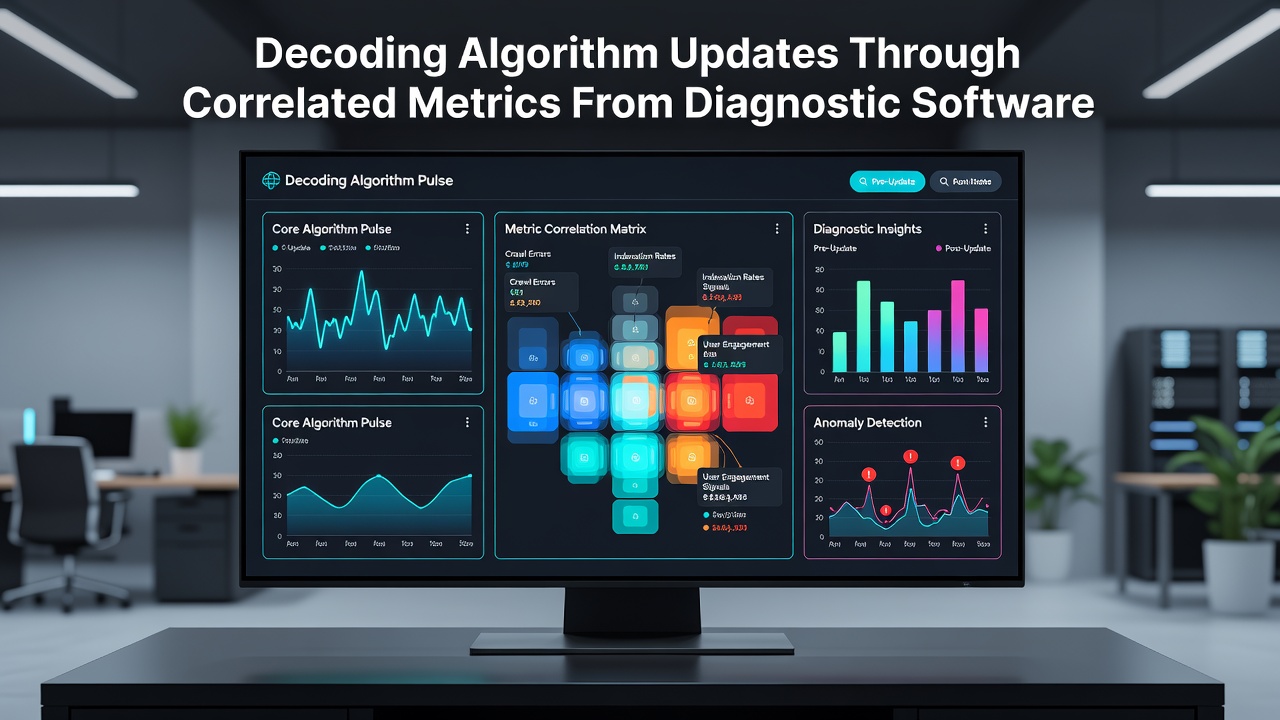
Search engines release modifications to ranking systems on a regular basis, and professionals rely on diagnostic platforms to identify shifts through patterns in multiple data streams at once. These tools aggregate information from crawl reports, ranking distributions, traffic logs, and user engagement signals, then apply statistical methods to surface relationships that point to underlying changes. When several metrics move in tandem, observers note the likelihood of an algorithmic adjustment rather than isolated site issues or seasonal fluctuations.
Core Metrics Tracked by Diagnostic Platforms
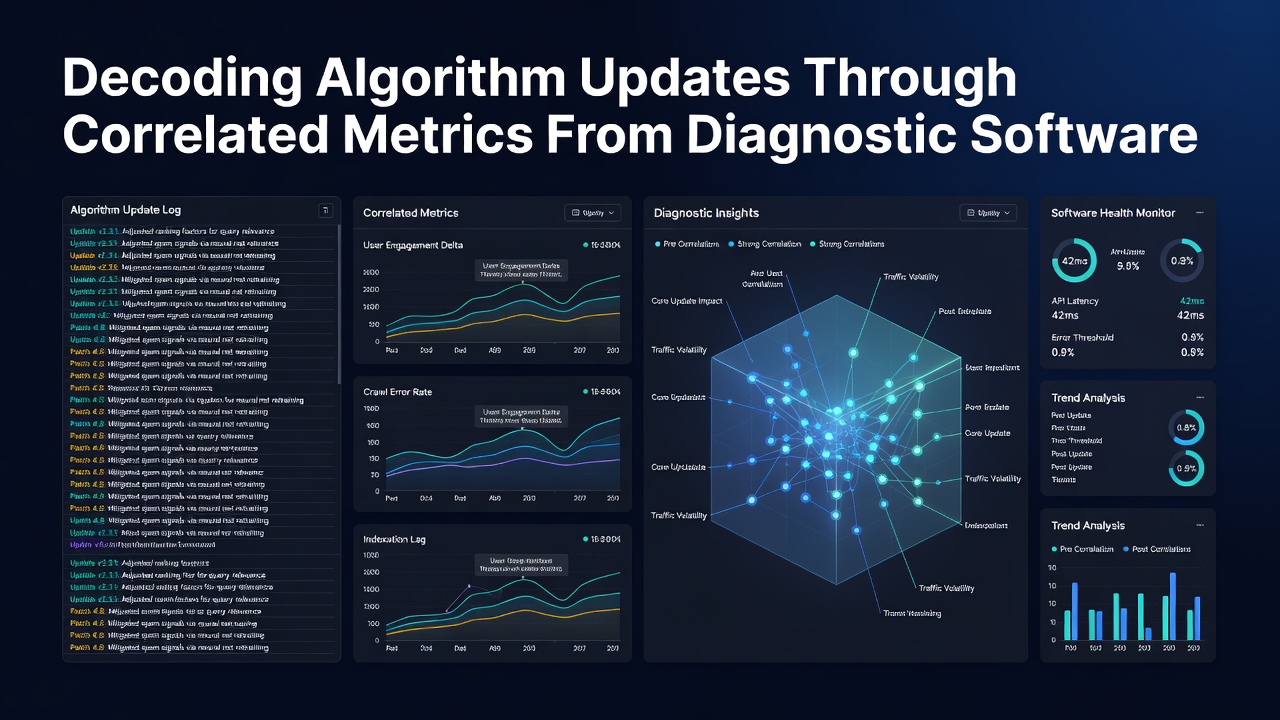
Diagnostic software records crawl frequency per URL type, indexation rates across site sections, and changes in SERP feature appearances. It also captures click-through rates, dwell time distributions, and bounce patterns segmented by device and location. Correlation engines within these platforms calculate coefficients between pairs such as reduced crawl budget and sudden drops in long-tail query visibility, or between improved mobile speed scores and gains in local pack rankings. Data shows that simultaneous movements across three or more independent signals increase the probability that an update has occurred.
Correlation Techniques Applied to Update Detection
Analysts apply time-series alignment to match metric spikes with known deployment windows published by search providers. They use regression models to isolate the contribution of each variable while controlling for external factors like competitor content launches or broad market events. In October 2026, several platforms reported synchronized increases in 404 error rates and decreases in featured snippet ownership across multiple industries, prompting further investigation into how new quality filters interacted with structured data handling. Researchers discovered that these correlations held across thousands of domains when segmented by content freshness and backlink age profiles.
Case Examples from Industry Monitoring
One analysis of e-commerce sites revealed that inventory page load times correlated negatively with product listing visibility during a core update cycle. Platforms flagged this relationship early because the coefficient exceeded thresholds established from prior confirmed events. Another study tracked news domains where social referral traffic correlated with organic position changes only after specific on-page elements were modified, suggesting the update placed greater weight on engagement velocity. Observers note that diagnostic outputs become actionable when they include confidence intervals around each correlation, allowing teams to prioritize fixes with measurable impact.
Integration with External Data Sources
Professionals supplement platform outputs with public logs from webmasters tools and aggregated reports issued by research institutions. A report from the Canadian Digital Technology Adoption program documented how mid-sized retailers used diagnostic correlations to adjust site architecture ahead of indexing shifts. Similarly, academic work from Australian university data labs has examined how click distribution metrics align with algorithmic emphasis on entity recognition. These external references help validate internal findings and reduce false positives that arise from single-tool anomalies.
Practical Workflow for Ongoing Monitoring
Teams configure automated alerts when correlation strength between key indicators surpasses historical baselines. They then export raw data for deeper statistical review using scripts that segment results by site type and update category. Regular comparison against previous cycles reveals whether certain metric clusters repeat across multiple updates, indicating stable algorithmic priorities. Those who maintain longitudinal datasets find that early detection improves when they track not only the direction of change but also the velocity and duration of each correlated movement.
Limitations and Refinement Needs
Correlation does not establish causation on its own, so analysts cross-check findings against official announcements and controlled experiments. Diagnostic software may miss updates that affect narrow verticals or low-volume queries because sample sizes become insufficient for reliable coefficients. Refinement occurs through continuous tuning of detection thresholds and incorporation of new signal types as platforms evolve. Evidence from multiple monitoring cycles indicates that combining automated correlation detection with manual review yields the most consistent identification of meaningful algorithm changes.
Conclusion
Diagnostic software enables systematic decoding of algorithm updates by surfacing correlated metric movements across crawl, ranking, and engagement datasets. When professionals apply rigorous statistical methods and validate against external references, they obtain clearer timelines and impact assessments. Continued refinement of these techniques supports more precise responses to ranking system modifications as search engines evolve their evaluation criteria.