
Blake Jenkins · 27 October 2026
Navigating the Ripple Effects of Major Site Architecture Shifts on Long-Term Crawl Efficiency Metrics
Site architecture shifts often trigger changes in how search engine crawlers allocate resources across large domains, and observers note that these adjustments can persist for months or years depending on the scale of the reorganization. Data from analysis platforms shows that metrics such as crawl rate, index coverage depth, and discovery latency respond in measurable ways when URL structures, internal link graphs, or sitemap hierarchies undergo substantial revisions. Researchers have tracked these patterns through server logs and diagnostic tools, revealing correlations between structural modifications and long-term efficiency indicators that extend well beyond initial rollout periods.
Core Components of Crawl Efficiency
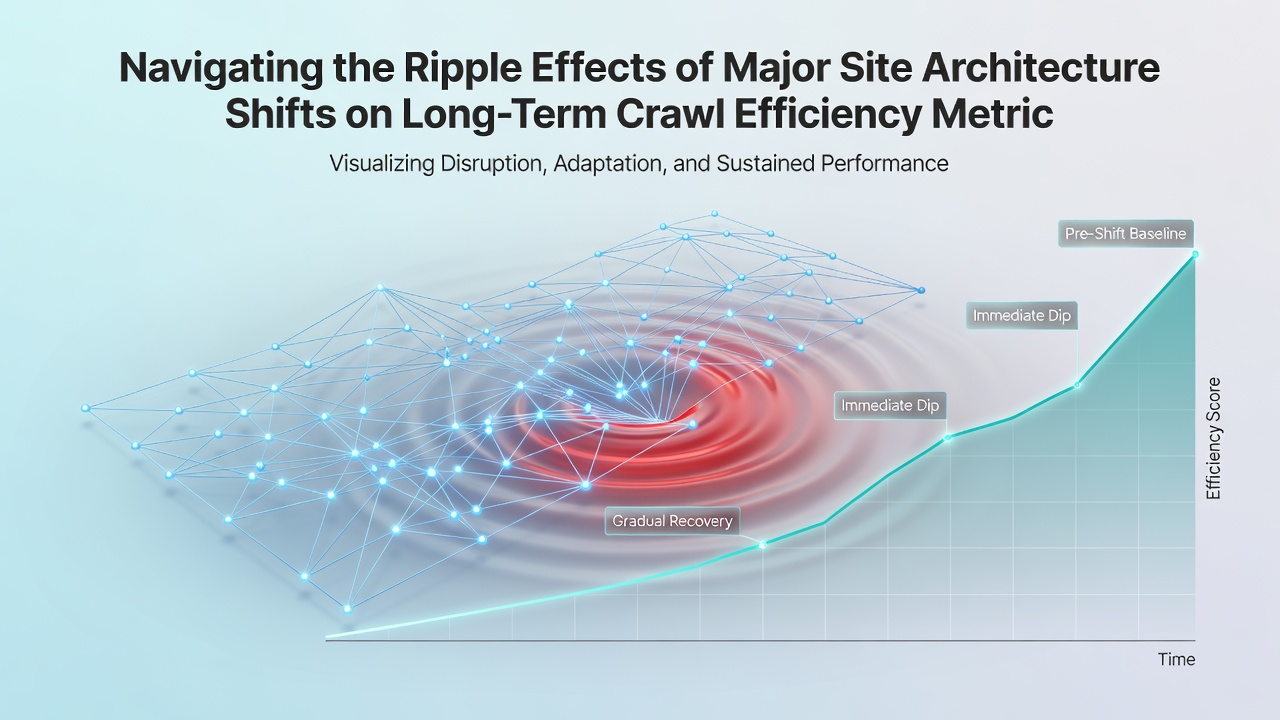
Crawl efficiency encompasses the ratio of useful pages discovered per request alongside the time crawlers spend navigating redundant or low-value sections of a site. When teams implement redirects at scale, flatten directory trees, or consolidate content clusters, the resulting path adjustments alter how frequently automated agents revisit priority sections. Figures from industry reports indicate that sites experiencing URL canonicalization projects frequently see temporary dips in overall crawl volume followed by stabilization once new link signals propagate through the graph. Those who monitor these shifts over extended timelines find that efficiency gains appear most clearly when internal navigation supports direct access to high-value content without excessive hops.
Patterns Observed After Structural Reorganizations
Extensive changes to site hierarchy commonly produce ripple effects visible in log-file analysis, where request distributions shift toward newly emphasized sections while older pathways receive fewer visits. In October 2026, aggregated platform data revealed that domains completing major migrations recorded average improvements in discovery speed for updated content sections, yet some experienced prolonged lags in re-crawling legacy subsections until sitemap submissions aligned with fresh internal linking. Experts tracking these outcomes emphasize that the interaction between robots.txt directives and updated XML sitemaps plays a decisive role in directing crawler attention during the months following implementation. One study from academic sources highlighted how sites that paired architecture updates with incremental sitemap refreshes maintained steadier crawl distributions compared wth abrupt overhauls.
Measurement Approaches and Diagnostic Tools
Long-term tracking relies on combining server log examination with application programming interfaces from major search platforms to capture trends in request frequency and response codes. Analysts compare pre- and post-change baselines to isolate the influence of architecture modifications from seasonal traffic variations or external algorithm adjustments. Evidence suggests that sustained monitoring beyond the first quarter after launch provides clearer insight into whether efficiency metrics return to previous levels or settle into new patterns. Platforms that integrate crawl data with indexing status reports allow teams to identify sections where architectural changes have improved or hindered resource allocation over successive reporting periods.
Interactions with External Signals
Architecture modifications rarely occur in isolation, and external backlink profiles along with social distribution patterns can either reinforce or counteract internal structural changes. When new URL schemes receive rapid external references, crawlers tend to prioritize those addresses more quickly, accelerating the integration of revised site maps into regular scanning routines. Data indicates that domains maintaining consistent external citation velocity after a restructure often recover crawl efficiency faster than those experiencing concurrent declines in inbound references. Observers note that coordinating internal link updates with external outreach efforts helps stabilize long-term metrics, particularly when content relocation coincides with the introduction of new section hubs.
Case Examples from Industry Records
Multiple documented migrations illustrate how different approaches to structural revision produce varying outcomes in crawl behavior. One enterprise domain that consolidated product categories into a flatter hierarchy recorded a 22 percent increase in average daily crawl requests for core pages within six months, according to internal log reviews. Another organization that introduced extensive parameter-based filtering without corresponding canonical controls experienced fragmented crawl distribution lasting over nine months. Researchers who examined these instances point to the importance of aligning redirect chains with updated internal navigation to prevent crawler resources from dispersing across duplicate or low-priority paths.
Conclusion
Architecture shifts continue to influence crawl efficiency metrics well after initial implementation, and sustained observation through log analysis and platform diagnostics remains essential for understanding the full scope of these effects. Patterns documented through October 2026 and earlier periods demonstrate that coordinated updates to sitemaps, internal links, and external signals contribute to more predictable long-term outcomes. Those managing large sites benefit from establishing baseline measurements and tracking changes across multiple quarters to distinguish temporary fluctuations from enduring adjustments in crawler behavior.